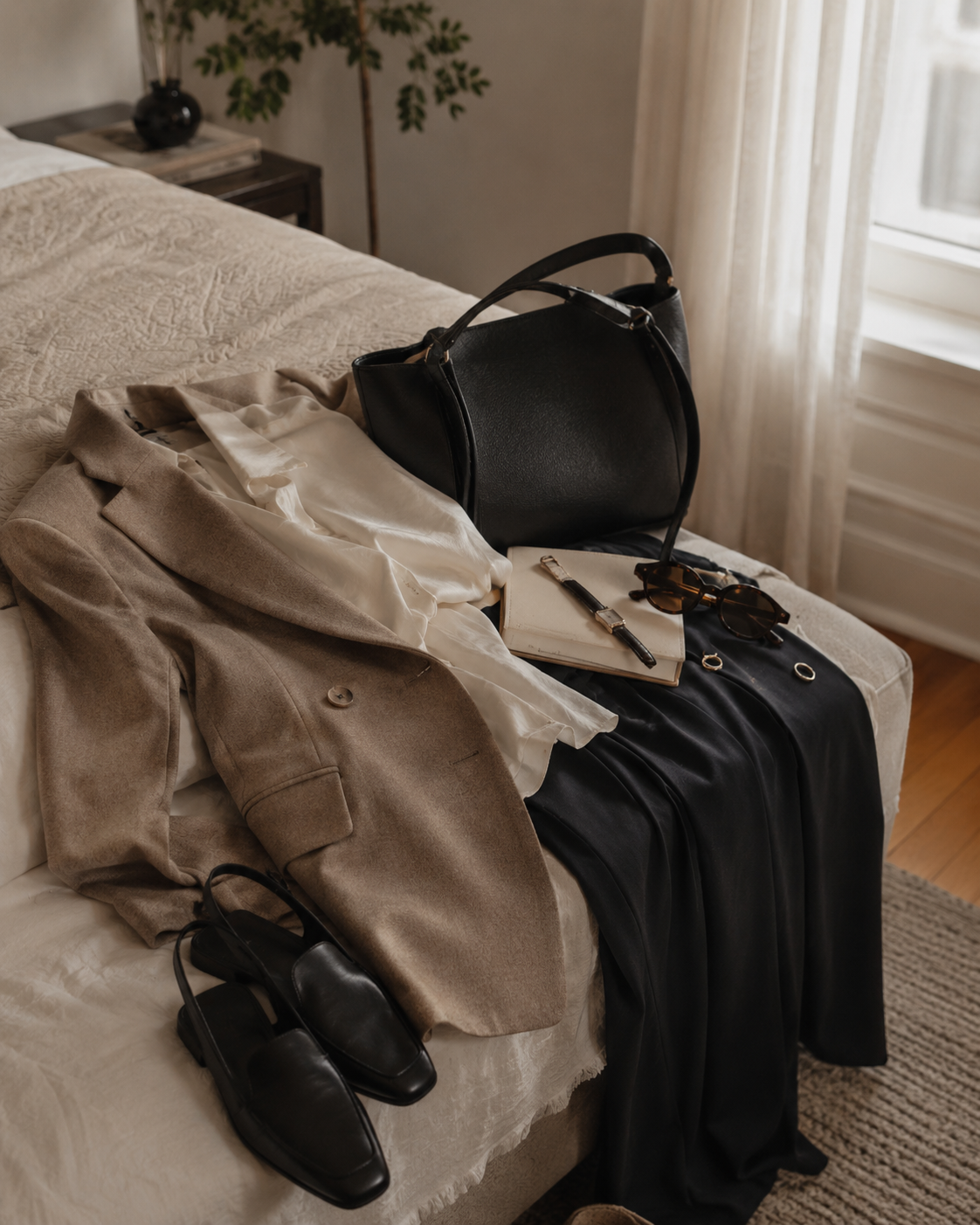
A promotion can make familiar clothes feel unexpectedly uncertain. The written dress code may be unchanged, but the moments in which you are seen have become more consequential.
You may now present to senior leaders, represent your team externally, travel more often, or enter rooms where you know fewer people. Those situations can expose small problems that were easy to ignore before: a blazer that pulls when you gesture, shoes that fail halfway through a conference day, or an outfit that looks right but never feels settled once you begin moving.
The principle
Increase reliability before you increase formality.
The useful distinction is between three things: your everyday baseline, the higher-visibility moments that are genuinely new, and the friction that makes your current options difficult to trust. The goal is not to dress like a different person. It is to remove preventable distraction from the moments when you want your attention somewhere else.

A practical method
The role-change wardrobe audit
Begin with the situations ahead, not with products. The audit turns a vague feeling that your wardrobe is no longer “senior enough” into a short list of observable decisions.
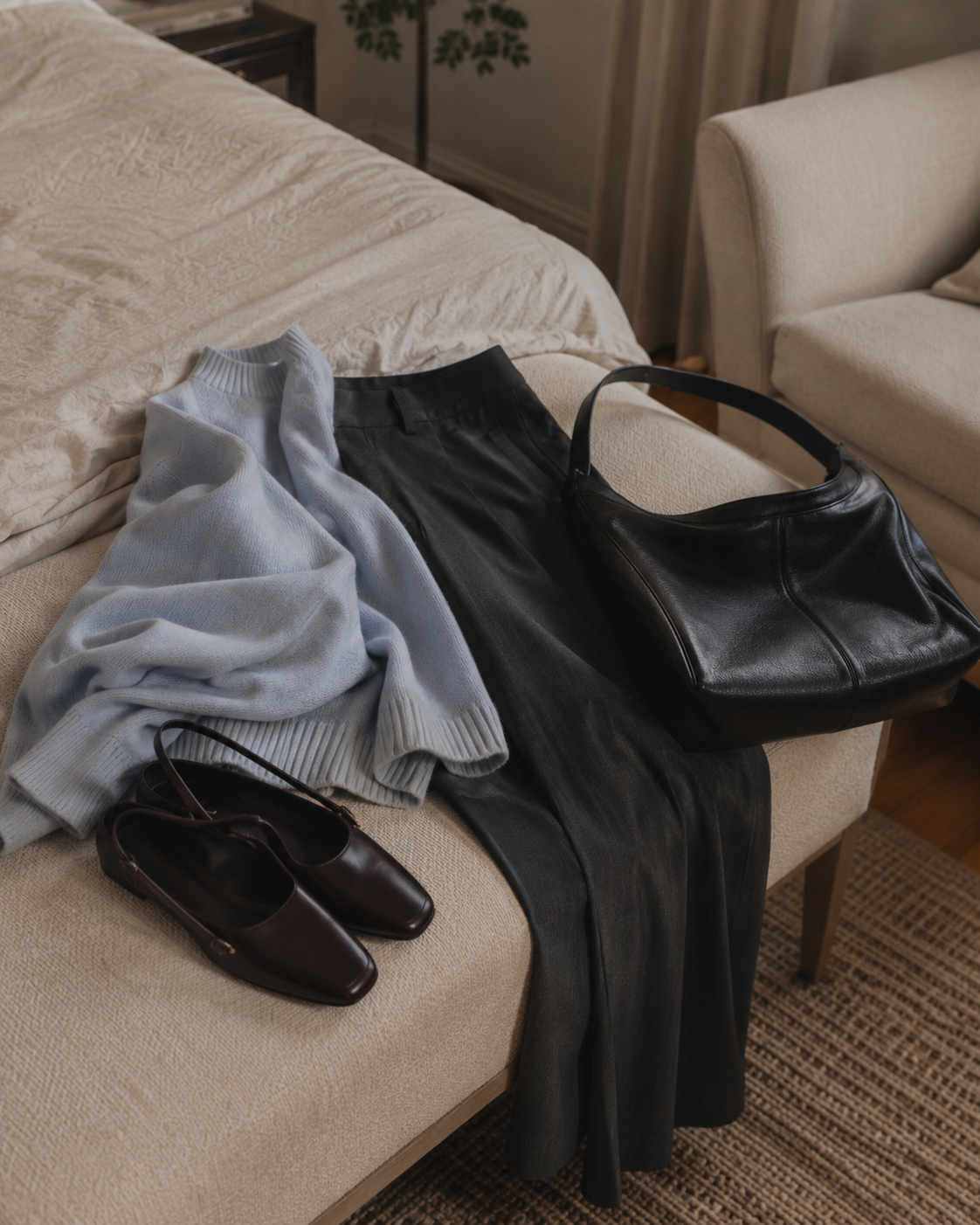
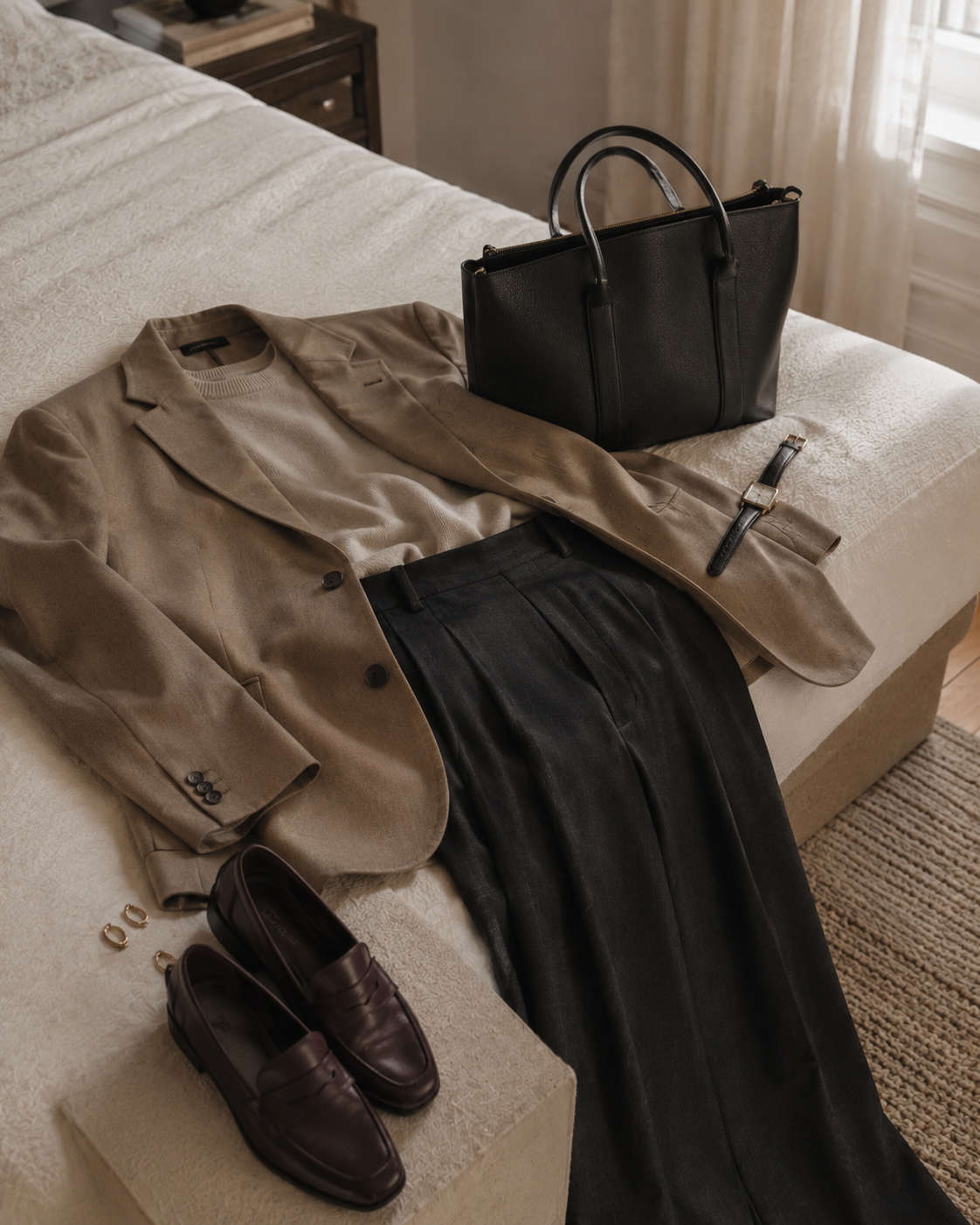
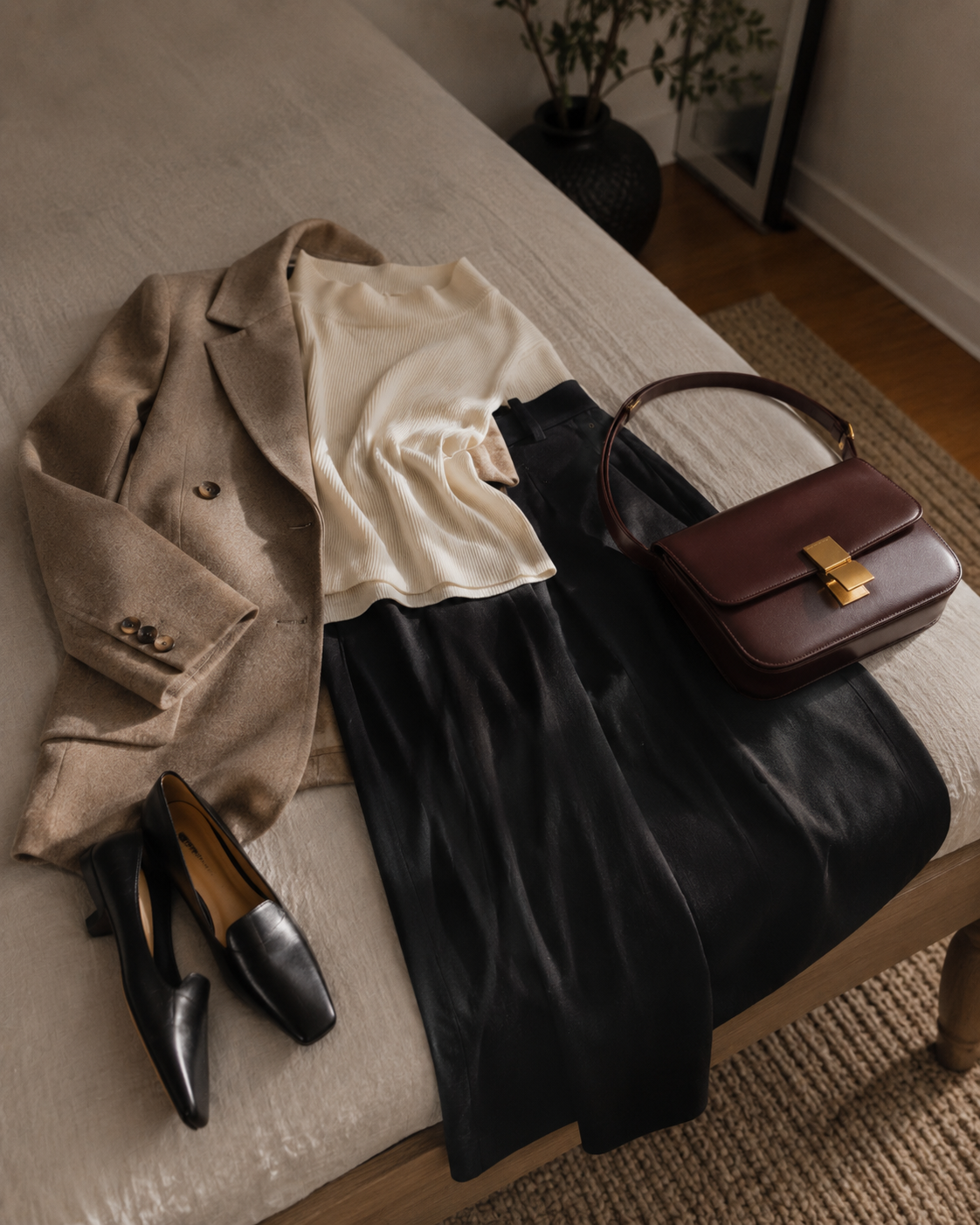
Repeat the base. Adjust only what the situation requires.
Name the moments
List the two to four recurring situations that are genuinely new: a leadership meeting, presentation, client dinner, conference, or increased office presence.
Output: a short situation list.
Assign what you own
Choose one tentative outfit for each situation before browsing. Work from the best available evidence in your own wardrobe.
Output: one starting formula per moment.
Test the complete formula
Sit, stand, walk, reach, layer, carry your work bag, and wear the shoes long enough to expose real problems.
Output: a pass or fail for real use.
Name the friction
Identify the actual issue: fit, movement, condition, temperature, coordination, context, confidence, or a genuinely missing function.
Output: one precise problem statement.
Choose the smallest fix
Press, clean, repair, tailor, restyle, borrow, rent, defer, or buy. A purchase is one possible intervention—not the default outcome.
Output: one justified action.
Build the repeat
Create a primary formula and a backup for each important situation. Reliability matters more than novelty.
Output: a small readiness plan.
What friction looks like
- Fit
- Pulling, slipping, gaping, pinching
- Movement
- Difficult to sit, reach, walk, or gesture
- Condition
- Worn soles, pilling, wrinkling, missing buttons
- Climate
- Overheating, poor layering, rain, or transit
- Coordination
- An item works alone but not in a full outfit
- Function
- No current piece can perform the required job
An item problem and a formula problem are not the same. Owning a blazer, trousers, and comfortable shoes does not necessarily mean you have a presentation outfit. A formula becomes dependable only after the pieces have been tested together under the conditions in which they will be worn.
A worked example
From “I need a new wardrobe” to six clear decisions
Imagine a newly promoted director in a hybrid office. Her daily dress code has not changed, but she now has a leadership presentation, recurring client meetings, and an industry conference ahead.
The first assumption
“My wardrobe is no longer senior enough.”
She starts browsing broadly for polished workwear, without knowing which situation or function any new piece needs to solve.
What the audit reveals
Her baseline works. Four points need attention.
Her blazer restricts movement, her trusted loafers need repair, and she has not tested complete formulas for speaking or conference travel.
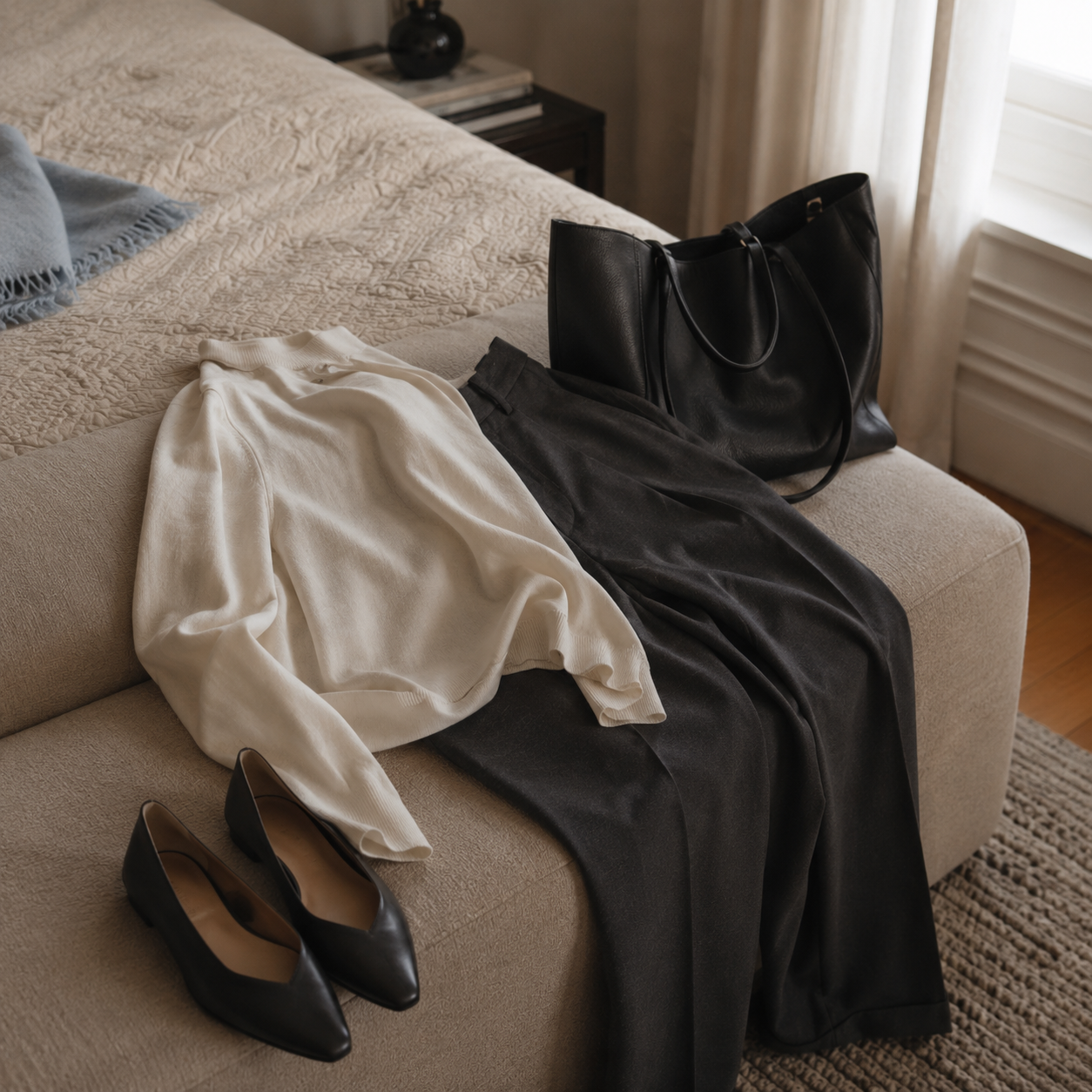
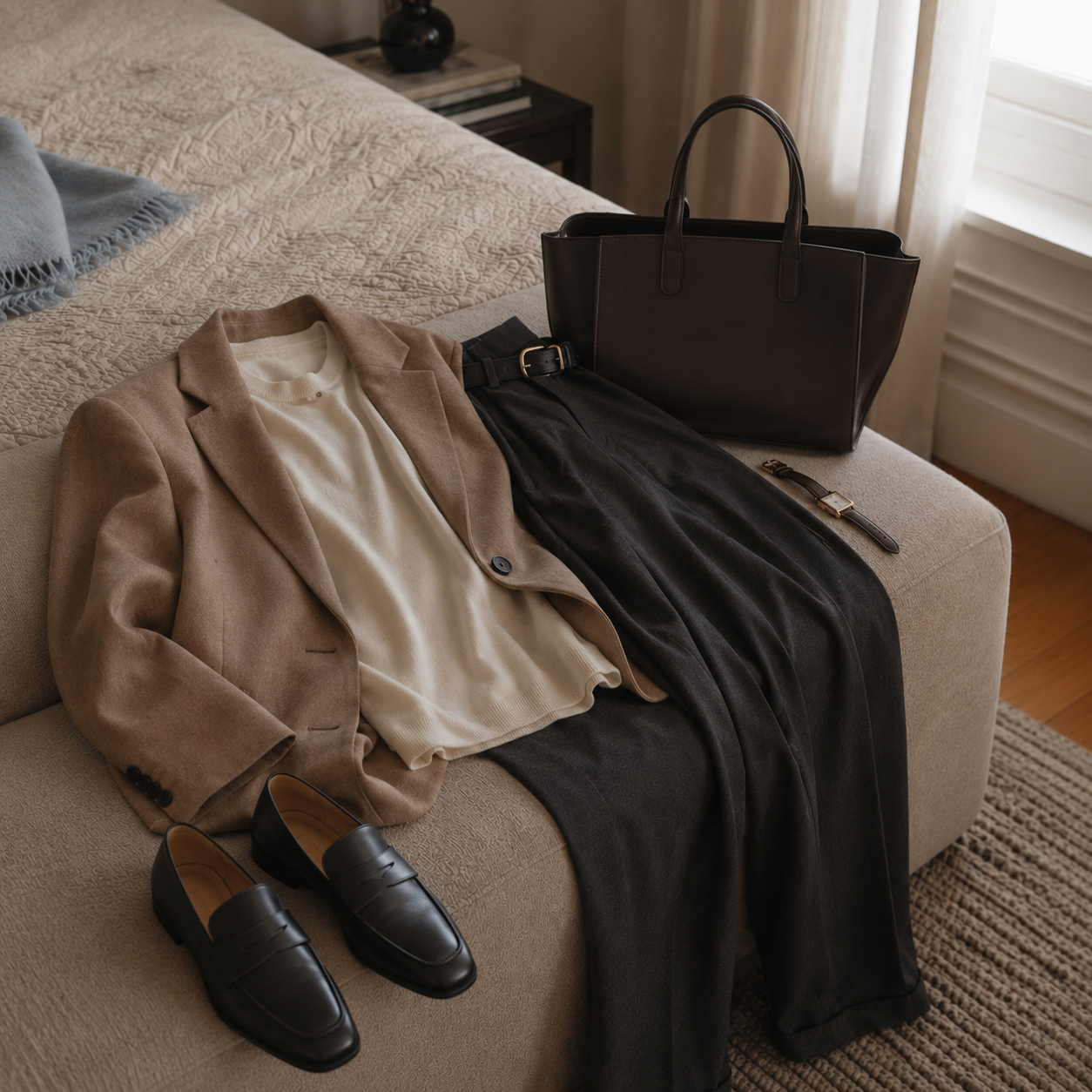
The result is not “buy nothing.” It is a better brief: one possible addition with a defined job, instead of a broad attempt to look more senior.
The purchase threshold
Buy only when the gap is specific, recurring, and tested.
- The situation will happen again.
- You have tested the closest option you already own.
- You can describe the missing function precisely.
Too vague: “I need something more professional.”
Useful: “I need a lightweight indoor layer that works over both presentation outfits, resists wrinkling in transit, and can stay on through a long meeting.”
Sometimes the room does call for greater formality. The point is not to avoid it. It is to identify which room, how much uplift it requires, and whether one dependable adjustment can cover it.
Interactive example
See how the method changes by situation.
Choose a role-change moment to see what likely stays, where the friction may be, and what deserves testing before you shop.
Promotion · mixed-formality office · first leadership presentation
Your everyday wardrobe probably does not need to become more formal.
The change is concentrated in a few higher-visibility moments. Keep the baseline that already works, then test whether structure, fit, or a dependable finishing layer would make those moments more reliable.
- Keep
- Your normal office baseline
- Prioritize
- Structure + reliability
- Test
- Two complete presentation formulas
- Avoid assuming
- That senior automatically means more formal

A more personal next step
Build your Leadership Wardrobe Plan.
The article gives you the method. The Leadership Wardrobe Plan applies it to your workplace, upcoming situations, and the clothes you already own—then identifies what to keep, test, tailor, repair, defer, or add.
Build my wardrobe planAbout two minutes · no account or email required